Liberius Averkievich Mikulitsyn
Doctor ZhivagoLiberius Averkievich Mikulitsyn is the son of Averkii Stepanovich Mikulitsyn, a former student deported from Petersburg, and the partisan commander known as Comrade Forester. First presented to Yurii Andreievich Zhivago through Anfim Samdeviatov’s account, his life moves from an unusual childhood name to wartime service as a teenage volunteer and, eventually, leadership of the Forest Brotherhood. The story makes him both a particular man shaped by family history and a figure in the improvised, socially mixed army of the civil war.
Identity and Family Background
Liberius was born after his father had settled in the region. Averkii Stepanovich, formerly a student at the Technological Institute, had been deported and placed under police supervision. He found work as manager at Krueger’s and married the eldest of four sisters, the Tuntsevas. His first wife’s death, following the shock of her son’s departure for the front, is the central family loss in the account of Liberius’s early life.
His father, described as a man who worshipped freedom, gave the boy the uncommon name Liberius. The name was shortened to Livka. Samdeviatov portrays the young Liberius as somewhat wild, but possessed of unusual talents; the narrative offers no catalogue of those abilities, leaving them as part of the reputation that precedes the adult partisan leader.
From Schoolboy to Decorated Volunteer
When the war came, Liberius was fifteen. He falsified the date on his birth certificate and went to the front as a volunteer, passing himself off as old enough to enlist. His action was an act of youthful determination, but it carried an immediate cost at home: his sickly mother could not bear the shock, took to her bed, and never recovered. She died two years before the revolution, as Samdeviatov dates it.
At the end of the war, Liberius returned as a lieutenant and a hero decorated with three medals. He also came back as a thoroughly indoctrinated Bolshevik delegate from the front. The contrast in his return is sharp: the boy who had secretly altered a document to enter the war now appears with military honors and an explicit political identity. The account connects these changes without explaining exactly how his experiences produced his convictions.
The Forest Brotherhood
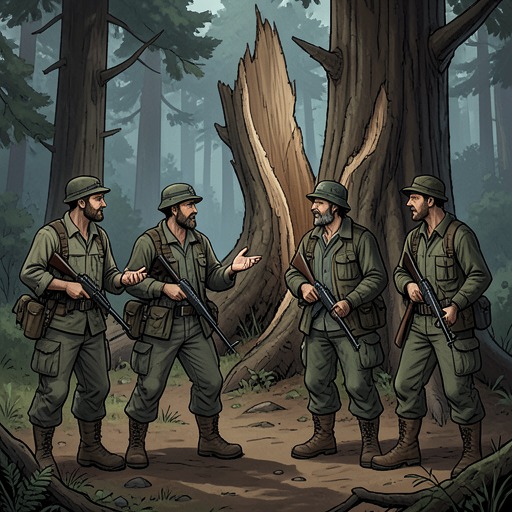
Samdeviatov identifies Liberius as the commander of the Forest Brotherhood, a unit within the partisan army. He explains that this army’s strength came from the union of two forces: the political organization that had taken leadership of the revolution and ordinary soldiers who, after the preceding war, refused to obey the old authorities. In this description, the partisan movement is neither a simple continuation of the regular army nor a socially uniform force; its military power arises from political organization meeting widespread disobedience.
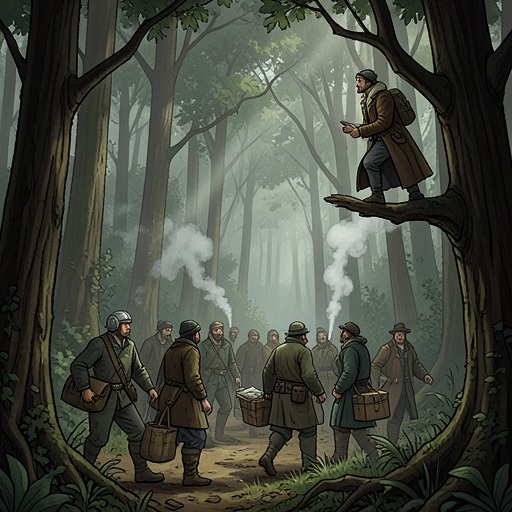
The fighters Samdeviatov lists come from sharply different backgrounds. Most are middle peasants, but the ranks also include poor peasants, unfrocked monks, sons of kulaks who have taken up arms against their fathers, ideological anarchists, people without identity papers, and high-school boys expelled for precocious skirt chasing. German and Austrian prisoners of war, attracted by the promise of freedom and repatriation, are also among them. The Forest Brotherhood belongs to this broad, unsettled coalition, and its commander is identified by his title as much as by his given name: Comrade Forester is Livka, the son of Averkii Stepanovich Mikulitsyn.
Reputation and Narrative Introduction
The story of Liberius reaches Zhivago through Samdeviatov, who explains why the partisan leader’s identity matters before recounting his family history. When Zhivago admits that he has not heard of the Forest Brotherhood, Samdeviatov treats the unfamiliarity as a barrier to telling its story: without knowing the partisans, the point would be lost. He redirects attention from the highway outside to the political and military world represented by the movement.
Later, an old man, Bacchus Mekhonoshin, retells what Samdeviatov has said about the Mikulitsyn family, using the local forms Mikulich and Mikulichna. He recalls Liberius’s first mother as an angel and white cherub, and can scarcely believe that Moscow has not heard of Comrade Forester. The repeated disbelief at the leader’s obscurity underscores the gap between local fame and Zhivago’s knowledge. Liberius is thus introduced not in a scene of command, but through layered testimony: his family history, his military record, and the amazed reactions of people who assume his name ought to be known.
Later Family Context and Significance
After his first wife’s death, Averkii Stepanovich married again, to Elena Proklovna. Samdeviatov describes her as having gone from school directly to marriage and as affecting a girlish, naïve manner; she tests visitors with questions about Suvorov and the conditions for equality of triangles. This account places Liberius within a changed household, though the supplied narrative does not describe his relationship with his stepmother or how often he returns to the family home.
Liberius’s importance in this introduction lies in the scale his biography brings together. A deported father’s devotion to freedom gives the son his distinctive name; the son’s falsified age takes him to war, where his enlistment devastates his mother; and the decorated veteran returns as a Bolshevik delegate to command a partisan unit assembled from disparate social and political origins. The narrative presents those details as the personal history behind a public title, while leaving Liberius himself offstage and his later actions beyond this account.